
Air service development and airport marketing teams make decisions using passenger demand, catchment areas, leakage, fares, demographics, competitive airport performance, and changing market conditions. Understanding these factors helps airports identify new air service opportunities, strengthen airline business cases, reach the right travelers, and grow their share of local demand.
This guide answers common questions airport Air Service Development (ASD) and marketing professionals face when analyzing their markets. Explore the topics below to learn how airports can better understand where passengers come from, why they choose one airport over another, where new route opportunities exist, and which markets offer the greatest potential for growth.
1. Understand Your Airport’s Catchment Area
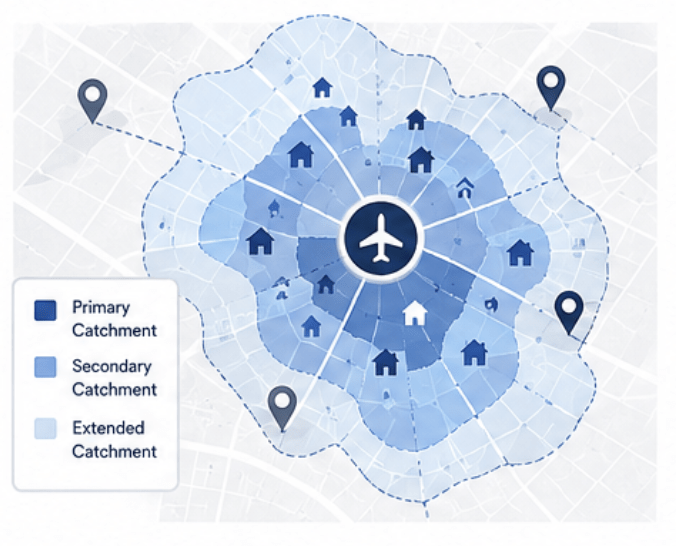
An airport’s catchment area represents the geographic market from which it draws passengers. But an airport’s true catchment is rarely defined by a simple radius or drive-time boundary. Travelers may choose among several airports depending on available nonstop service, airfare, travel time, and other factors.
Understanding passenger behavior at the ZIP-code level can help airports determine where they are strongest, where they compete with neighboring airports, and where opportunities exist to capture additional demand.
Common Airport Catchment Questions
- What is an airport catchment area and how is it calculated?
- Where do our airport’s passengers live?
- How far will passengers drive to an airport?
- How do airfare and nonstop service affect airport choice?
- How do competing airports affect an airport’s catchment area?
- How do you calculate airport market share by ZIP code?
2. Understand Passenger Leakage
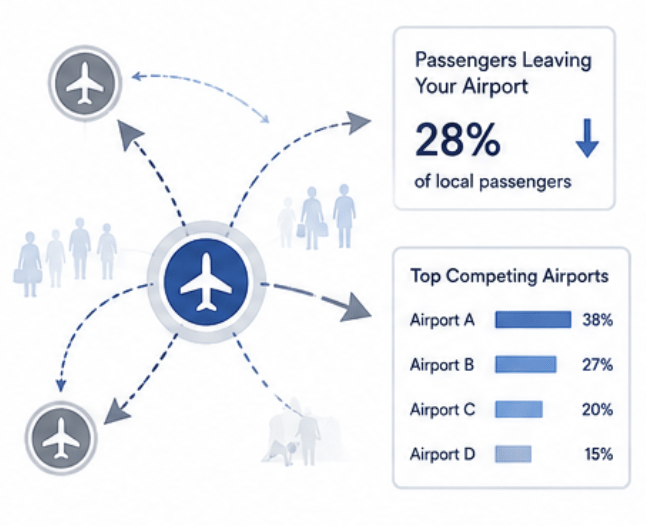
Leakage analysis helps airports determine how much demand they are losing, where those travelers are located, which competing airports they use, and where the greatest opportunities may exist to recover local passengers.
Common Airport Leakage Questions
- What is airport passenger leakage and how do you measure it?
- Which airports are our passengers leaking to?
- Which ZIP codes have the highest passenger leakage?
- Why do passengers choose a competing airport?
- How can a regional airport compete with a nearby hub?
- How can airports identify and recover the most addressable passenger leakage?
3. Find New Air Service Opportunities
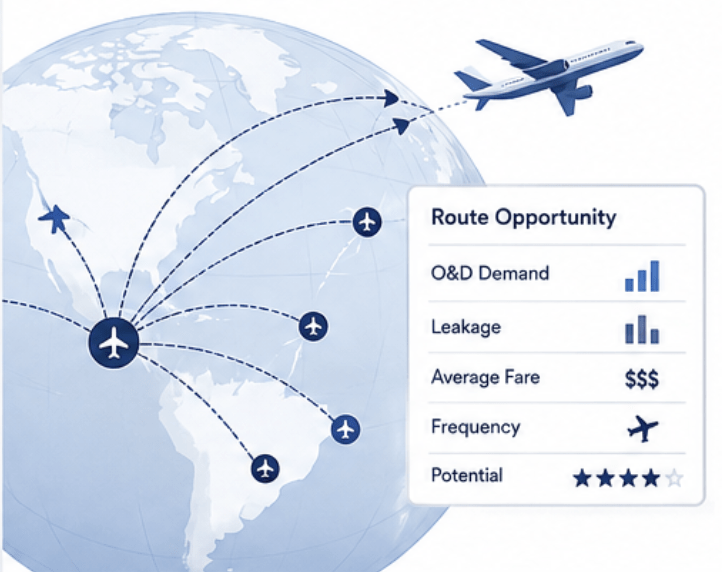
One of the primary responsibilities of an Air Service Development team is identifying routes that could support new or expanded service. Passenger demand alone, however, does not always tell the complete story. Airports also need to understand existing itineraries, leakage, fares, connecting traffic, competing service, and the potential impact of a new nonstop flight.
Combining these factors can help airports prioritize route opportunities and build stronger, data-driven business cases when approaching airlines.
Common Air Service Development Questions
- What new nonstop routes could our airport support?
- What destinations have the most unserved or underserved demand?
- How do airports estimate true origin-and-destination passenger demand?
- How much passenger demand could a new nonstop flight stimulate?
- How do you forecast demand for a proposed new route?
- How do you build a strong airline business case for new service?
4. Identify the Best Markets for Airport Marketing
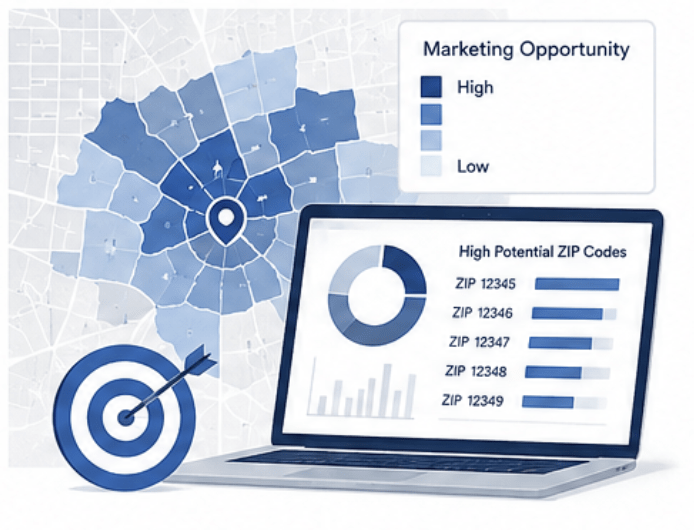
Airport marketing becomes more effective when campaigns target markets with the greatest opportunity rather than simply the areas that already generate the most passengers.
A ZIP code with substantial air travel demand but relatively low usage of the local airport, for example, may represent a greater opportunity than an area where the airport already captures most travelers. Combining passenger demand, airport market share, leakage, demographics, and geographic accessibility can help marketing teams determine where their resources may have the greatest impact.
Common Airport Marketing Questions
- Where should airports target their marketing?
- Which ZIP codes have high air travel demand but low airport market share?
- How should airports geographically target digital advertising?
- How should airports market a new nonstop route?
- How can airports market against a larger competing airport?
- How do airports measure the effectiveness and ROI of marketing campaigns?
5. Understand Your Passengers
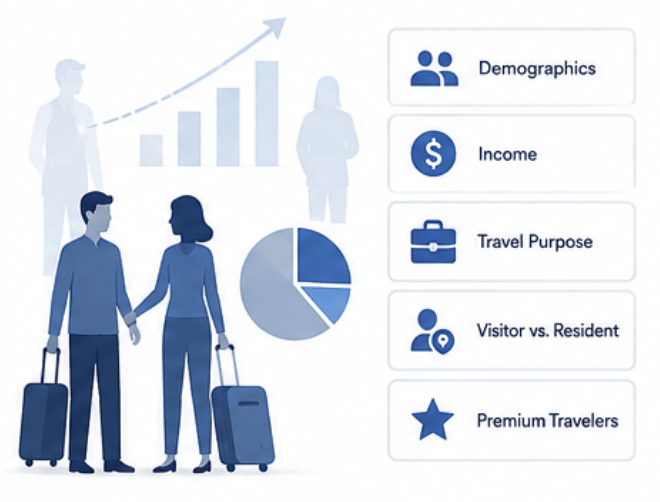
Knowing how many passengers use an airport is only part of understanding the market. Air Service Development and marketing teams can benefit from understanding passenger demographics, economic characteristics, visitor patterns, and the differences between traveler segments.
Combining passenger demand with demographic and economic information can help airports better understand the communities they serve, identify valuable traveler segments, support airline presentations, and develop more targeted marketing strategies.
Common Airport Passenger Questions
- What are the demographic and economic characteristics of our airport’s market?
- Where do high-income and premium air travelers live?
- How does household income affect air travel demand and airport choice?
- How do resident and visitor travel patterns differ?
- Which areas have the highest propensity for air travel?
6. Understand How Your Market Is Changing
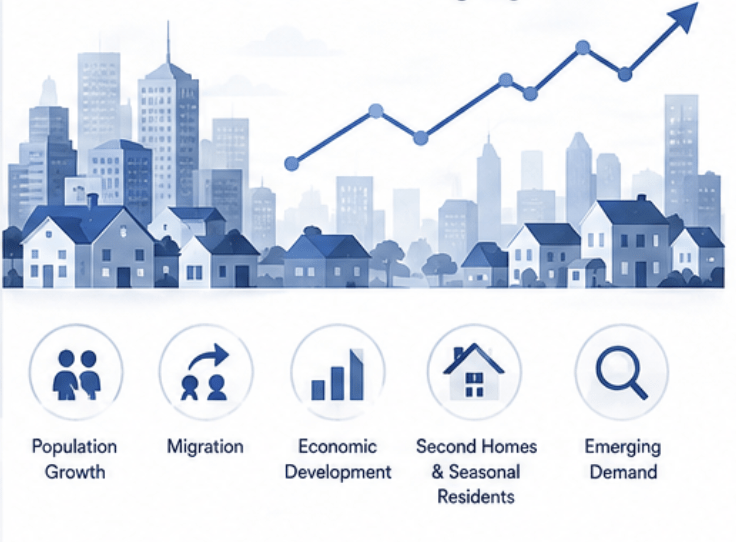
Airport markets are constantly changing. Population growth, migration, economic development, second-home ownership, tourism, and changing travel patterns can reshape where passenger demand comes from over time.
Looking beyond historical passenger totals can help airports identify emerging markets before those changes become obvious in traditional aviation statistics. These trends can also provide valuable evidence when discussing future demand with airlines or determining where future marketing efforts should be concentrated.
Common Airport Market Trend Questions
- How does population growth and migration affect airport passenger demand?
- Where are new residents moving into our market from?
- Which parts of our airport’s market are growing fastest?
- How do second-home owners and seasonal residents affect airport demand?
- How does economic development affect air travel demand?
- How can airports identify emerging sources of passenger demand?
Make Better Decisions with Airport Market Data
Understanding an airport market requires more than looking at total passenger counts. Air Service Development and marketing teams increasingly need to understand where passengers come from, where they travel, which airport they choose, why they make that choice, and how those patterns are changing.
FlightBI provides airport market intelligence designed to help airports answer these questions using airline ticketing data, cell phone data, hotel data, demographic, and economic data.
Airport teams can use these insights to understand catchment areas, identify passenger leakage, evaluate new air service opportunities, identify high-opportunity marketing markets, understand passenger segments, and monitor changes in their local market.
Explore the questions above to learn more about airport catchment analysis, passenger leakage, air service development, airport marketing, passenger demographics, and changing market demand.